
Culture is a Verb: Turning Rugby Values into Action with SAFFA RUGBY
- Zoek Web Design
- Jan 26
- 5 min read

Every rugby club talks about culture.
Respect. Discipline. Teamwork. Integrity.
These words get painted on locker room walls, printed on team shirts, and repeated at every parent meeting.
But here's the truth most coaches won't tell you: words don't build culture. Actions do.
At SAFFA RUGBY, we live by a simple formula:
Culture = Values + Behaviours
Values without behaviours are just nice ideas. Behaviours without values are chaos. But when you connect the two? That's when you build something that lasts.
Let's break down how this actually works: and how our South African coaching heritage makes it happen for Colorado teams.
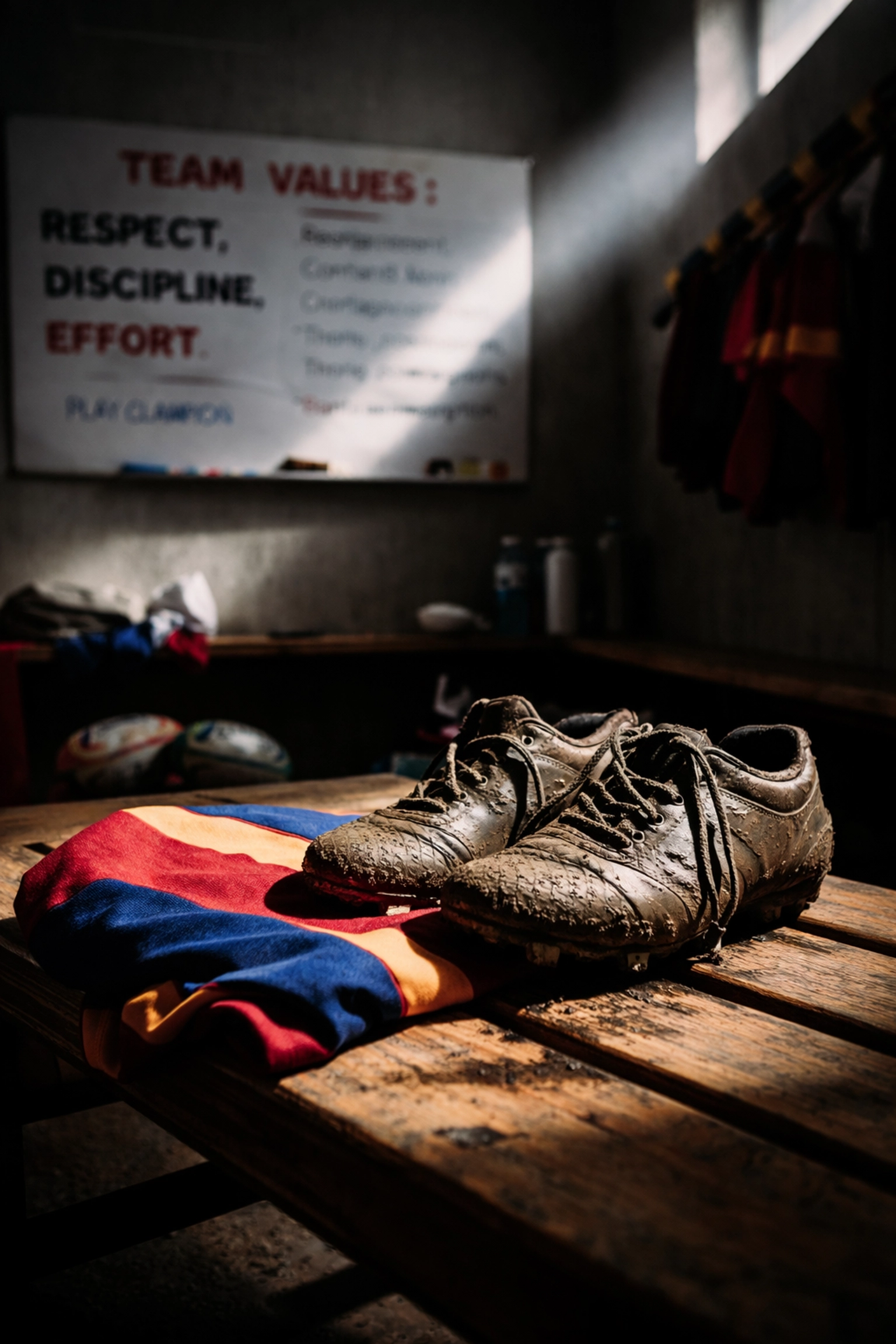
The Problem with "Values on the Wall"
Walk into most youth sports facilities and you'll see the same thing. Mission statements. Core values. Motivational posters.
Nice, right?
But watch the actual training session. Listen to how coaches speak to players. Observe what happens when a kid makes a mistake or loses their temper.
Often, there's a disconnect.
The wall says "respect." The behaviour says something else entirely.
This isn't a criticism: it's a reality. Translating values into consistent, daily behaviours is genuinely hard. It requires intentionality, repetition, and coaches who model what they teach.
That's where most programs fall short. And that's exactly where SAFFA RUGBY steps in.
Culture = Values + Behaviours: The Formula Explained
Let's get practical.
A value is what you believe matters. A behaviour is what you actually do.
Example: Respect
Value: "We respect our teammates, opponents, and officials."
Behaviour: Players shake hands with every opponent before and after the game. They address referees as "Sir" or "Ma'am." They pick up a fallen teammate: any teammate: without being asked.
Example: Discipline
Value: "We are disciplined on and off the field."
Behaviour: Players arrive 10 minutes early. They set up their own equipment. They run the full drill, every time, even when tired. They complete homework before training.
Example: Teamwork
Value: "We succeed together."
Behaviour: The strongest player helps the weakest. Nobody celebrates alone. When one person runs laps, everyone runs laps.
See the difference?
Values are the "what." Behaviours are the "how."
When you connect them explicitly: and reinforce them daily: culture stops being a poster and starts being a lived experience.
Why South African Rugby Gets This Right
In South Africa, rugby isn't just a sport. It's woven into the fabric of communities. It's taught in schools from age five. It carries weight, history, and meaning.
Growing up in that environment, you don't just learn to play rugby. You learn to live it.
Coach Rob Quickfall puts it simply: rugby is embedded in his DNA. It's not something he picked up: it's something he grew up breathing.
That's the SAFFA RUGBY difference.
Our coaches don't teach values from a textbook. They model them because that's how they were raised. They instinctively connect the dots between what you say and what you do because that's how South African rugby culture operates.
When a SAFFA RUGBY coach tells your kid to "respect the game," they're not reciting a slogan. They're passing down a way of being that's been shaped across generations.

Behaviours On the Field
So what does this look like during an actual SAFFA RUGBY session?
Here's a snapshot:
Before Training
Players greet every coach by name
Equipment is set up collectively: no standing around
Late arrivals apologise to the group, not just the coach
During Drills
Mistakes are acknowledged, not hidden
Players encourage each other vocally
Effort is praised; laziness is addressed immediately
After Training
Gear is packed away together
Quick team huddle: what went well, what needs work
Players thank the coaches before leaving
None of this is complicated. But all of it is intentional.
Every single behaviour reinforces a value. Over weeks and months, it becomes automatic. It becomes culture.
Behaviours Off the Field
Here's where most programs drop the ball.
Culture doesn't stop when training ends. If your values only apply for 90 minutes twice a week, they're not really values: they're performance.
SAFFA RUGBY coaches emphasise the carry-over:
Discipline means doing schoolwork before gaming
Respect means how you speak to your parents, teachers, and siblings
Teamwork means helping out at home without being asked
Coach Youssef Driss captures this perfectly: rugby is a platform to "enjoy the game on the field and try to make a better world outside the field."
That's the goal. Not just better players: better humans.
We talk to parents about this. We check in with kids about life outside rugby. We make it clear that the jersey comes with expectations that extend beyond the pitch.

World Rugby Educators: The Standard Matters
Anyone can call themselves a coach. Certification is what separates professionals from enthusiasts.
SAFFA RUGBY coaches are World Rugby Educators. That means they've been trained: and assessed: on how to teach the game safely, effectively, and in alignment with global standards.
But here's the part that relates to culture: World Rugby certification includes values-based coaching.
It's not just about tackling technique or game strategy. It's about how you communicate with players. How you handle conflict. How you model integrity under pressure.
When you combine that formal training with the instinctive, culturally-embedded approach that South African coaches bring, you get something powerful.
You get coaches who can articulate the values, demonstrate the behaviours, and hold players accountable in a way that feels supportive rather than punitive.
That's how you build culture that sticks.
How SAFFA RUGBY Makes This Seamless for Colorado Teams
Moving to a new country doesn't erase your rugby DNA. If anything, it sharpens it.
SAFFA RUGBY coaches bring a unique blend:
Deep cultural roots in South African rugby traditions
World Rugby certification ensuring global best practices
Local understanding of what Colorado families need
This combination means we don't just import a foreign system and hope it works. We adapt. We meet players where they are. We translate values into behaviours that make sense in American youth sport culture: while maintaining the standards that make rugby special.
Whether it's a player development clinic or a coaching development programme, the approach is the same:
Define the value. Demonstrate the behaviour. Repeat until it's second nature.

Your Takeaway: Culture is Built, Not Declared
If you're a coach, here's your homework:
Pick one value your team claims to hold
List three specific behaviours that demonstrate that value
Commit to reinforcing those behaviours at every session for the next month
Watch what happens.
Culture isn't a speech. It's not a poster. It's not a one-time team bonding exercise.
Culture is a verb. It's what you do, repeatedly, until it becomes who you are.
At SAFFA RUGBY, we don't just talk about respect, discipline, and teamwork. We live them: every drill, every session, every interaction.
That's the South African way. And we're proud to bring it to Colorado.
Ready to experience rugby culture done right? Connect with SAFFA RUGBY and see the difference values-driven coaching makes.
Comments