
Inclusion on the Field: The Rise of Accessible Rugby Programs and Why They Matter
- Zoek Web Design
- Jul 31, 2025
- 6 min read

Rugby's iconic image often features bone-crushing tackles and athletic prowess at the highest level. But beyond the professional spotlight, a powerful movement is reshaping the sport from the ground up. Across fields worldwide, rugby is becoming a game truly for everyone—regardless of ability, background, or circumstance. At SAFFA RUGBY, we believe this evolution isn't just good for the sport; it's essential for its future.
Breaking Down Barriers: Rugby's Inclusive Revolution
For decades, rugby carried a reputation as a sport with significant barriers to entry. The physical nature, complex rules, and traditional perceptions about who belongs on a rugby pitch limited participation. Those with disabilities, different body types, or without access to established programs often found themselves sidelined.
Today, that's changing dramatically. From grassroots initiatives to international governing bodies, rugby is undergoing a transformation focused on one core principle: everyone deserves the chance to experience the magic of the game.
"Rugby has the unique power to build confidence, create community, and change lives," says Rob Quickfall, founder of SAFFA RUGBY. "When we limit who can play, we limit the sport's potential to make a positive impact."
This isn't just idealistic thinking—it's backed by concrete action across the rugby world.
Game-Changing Modifications: Making Rugby Accessible
World Rugby's "Game On Global" initiative represents perhaps the most significant structural change promoting inclusion. Introduced in 2022, these community law variations allow national unions to implement modifications that make the game safer and more accessible without sacrificing its essential character.
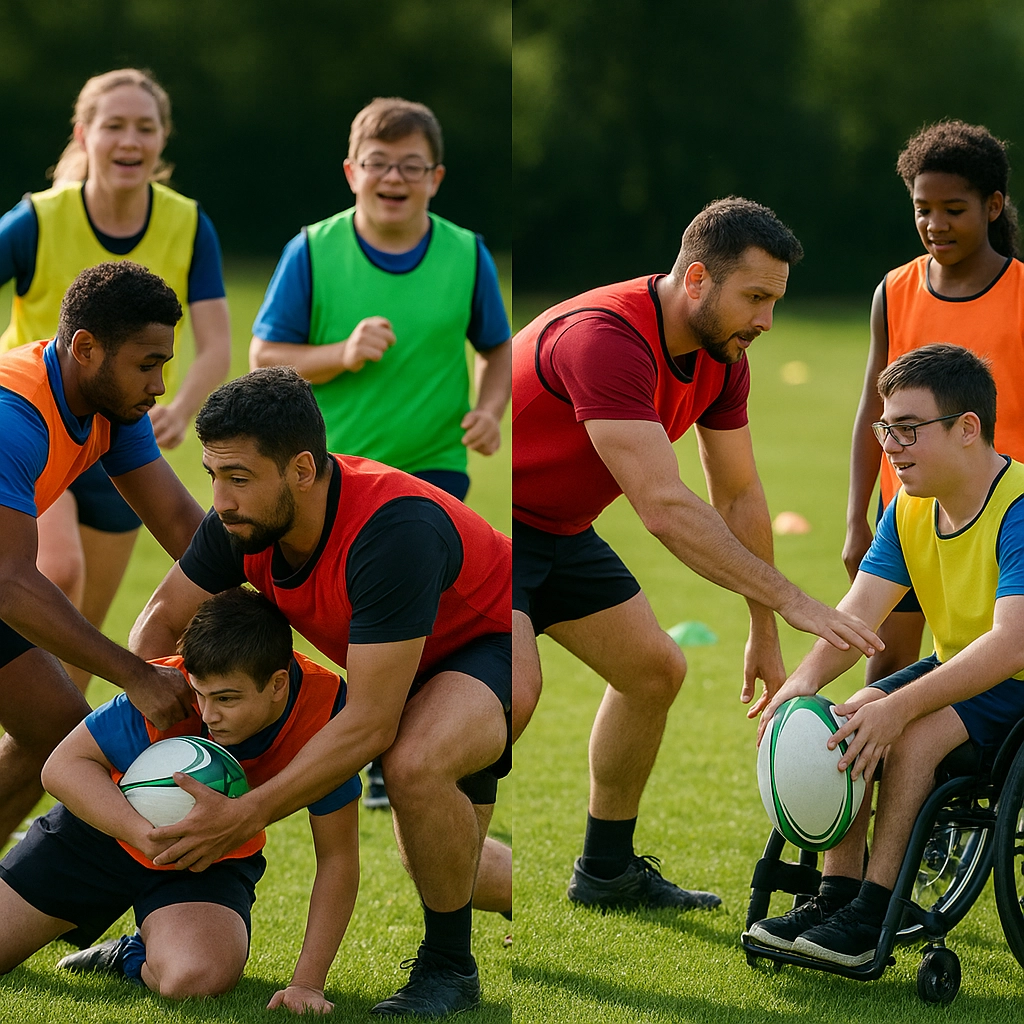
These adaptations include:
- Lower tackle height requirements reducing concussion risk and making participation safer for players of all abilities
- Weight-banded matches ensuring fair competition based on physical development rather than just age
- Flexible team sizes allowing matches to proceed even when full 15-player squads aren't available
- Adjusted pitch dimensions making the game more manageable for younger players and those with mobility limitations
- Modified scrum rules decreasing injury risk while maintaining this fundamental aspect of rugby
The beauty of these variations lies in their flexibility. Rugby unions can implement changes based on local needs, creating pathways for participation that simply didn't exist before.
"The traditional model of rugby demanded conformity from players," notes Quickfall. "Today's approach asks instead: how can we adapt the game to welcome more players?"
Beyond Physical Disability: Rugby for All Minds
Inclusion extends far beyond physical adaptations. Some of the most inspiring developments come from programs focused on neurodiversity and intellectual disabilities.
Special Olympics rugby programs have exploded in popularity, with flag rugby tournaments bringing together hundreds of athletes. In 2025, Special Olympics France partnered with professional club Racing 92 to host a landmark tournament featuring 300 players from five countries.
These "Unified Sports" programs, where athletes with intellectual disabilities play alongside those without, showcase rugby's potential to break down societal barriers through shared experiences on the field.
James, a Special Olympics rugby athlete, shared: "Before rugby, I didn't have many friends. Now I'm part of a team where people cheer for me, and I get to travel to tournaments. Rugby changed everything."
Programs focusing on autism, ADHD, and other neurodivergent conditions are similarly transforming lives. These structured environments offer predictable routines, clear instructions, and sensory accommodations while delivering rugby's benefits of physical activity, teamwork, and accomplishment.
Women and Girls: Rugby's Fastest Growing Demographic
No conversation about inclusion in rugby would be complete without acknowledging the revolution happening in women's and girls' rugby. Long marginalized within the sport, female rugby players now represent its fastest-growing demographic globally.

The transformation isn't just about increasing numbers—it's about creating genuine pathways from introduction to excellence:
- Girls-only rugby programs providing safe spaces to learn fundamentals
- Women's coaching initiatives ensuring representation in leadership
- Professional leagues and international competitions offering visible role models
- Mixed-gender youth rugby breaking down stereotypes from an early age
"What we're seeing isn't just growth in women's rugby," explains Quickfall. "It's a complete reimagining of who rugby is for, challenging assumptions that have limited the sport for generations."
Rugby's Adaptive Evolution
The spectrum of adaptive rugby variations continues to expand, meeting diverse needs:
Wheelchair Rugby (Murderball) has gained international recognition, combining elements of rugby, basketball, and handball for athletes with mobility impairments. The full-contact nature preserves rugby's intensity while opening participation to new athletes.
Walking Rugby has become a sensation among older players and those with mobility challenges. By removing running and full contact while maintaining rugby's strategic elements and ball skills, these programs keep players in the game for decades longer than traditional formats allow.
Touch and Tag Rugby variations reduce physical barriers while preserving the sport's strategic complexity. These non-contact or limited-contact versions serve as both entry points for beginners and lifelong options for those who love the game but prefer to avoid full contact.
Sensory-Adapted Sessions incorporate modifications for players with sensory processing disorders, including quieter environments, visual cues alongside verbal instructions, and consistent routines to reduce anxiety.
The "Why": Benefits Beyond the Scoreboard
The rise of accessible rugby delivers benefits that transcend mere participation numbers:
For Individual Players:
- Physical health improvements including cardiovascular fitness, strength, and coordination
- Mental health benefits through reduced isolation, increased confidence, and sense of achievement
- Transferable life skills including teamwork, communication, and resilience
- Identity development beyond disability or difference
For Communities:
- Reduced stigma as diverse players interact and form relationships
- Greater awareness of capabilities rather than limitations
- Stronger social integration through shared passion and purpose
- More representative sport culture reflecting society's full diversity
For Rugby Itself:
- Expanded talent pool discovering athletes who might never have tried traditional rugby
- Innovation in coaching and teaching methods benefiting all players
- Increased participation ensuring rugby's relevance and growth
- Richer rugby culture incorporating diverse perspectives and experiences
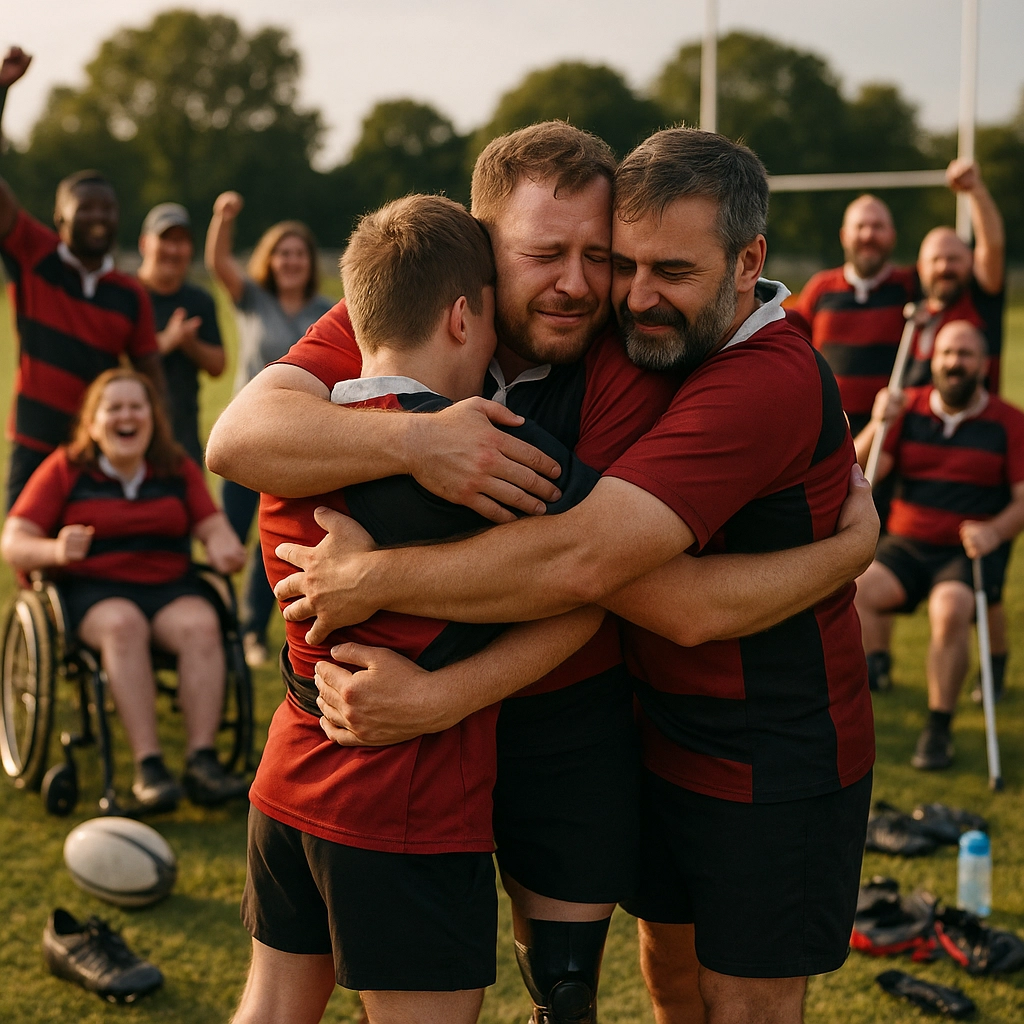
Making Inclusion Reality: The Role of Coaches and Clubs
While structural changes from governing bodies are vital, the true heroes of rugby's inclusive revolution are the coaches, volunteers, and club administrators creating welcoming environments on the ground.
At SAFFA RUGBY, we believe effective inclusive coaching requires:
- Continuous education about diverse needs and adaptive techniques
- Flexibility in applying rules and modifications based on individual players
- Person-centered approaches focusing on abilities rather than limitations
- Community building ensuring all players and families feel valued
- Patience and creativity finding solutions when challenges arise
"The best inclusive coaches aren't necessarily those with the most technical knowledge," Quickfall observes. "They're the ones who see potential in every player and have the creativity to unlock it."
Our individual coaching sessions and team training programs incorporate these principles, ensuring every player receives the support they need to thrive.
The Business Case for Inclusion
Beyond the moral imperative, rugby's inclusive evolution makes business sense. The Men's Rugby World Cup 2027 in Australia demonstrates this with its focus on spectator accessibility—offering one million tickets under $100 and free entry for children under two.
This approach recognizes that making rugby accessible to diverse audiences creates:
- Larger fan bases
- More diverse talent pipelines
- Stronger community connections
- Enhanced brand reputation
- Greater long-term sustainability
The Path Forward: Challenges and Opportunities
Despite remarkable progress, barriers to truly inclusive rugby remain:
- Resource limitations for specialized equipment and facilities
- Training gaps for coaches working with diverse populations
- Persistent attitudinal barriers about who "belongs" in rugby
- Transportation and logistical challenges for participants with disabilities
- Balancing safety concerns with inclusive opportunities
These challenges aren't reasons to slow down—they're opportunities to innovate. Rugby's inclusive future will require continued investment, creative problem-solving, and unwavering commitment to the principle that everyone deserves to experience the game's transformative power.
Join Rugby's Inclusive Revolution
At SAFFA RUGBY, we're committed to being part of this evolution. Whether you're a player seeking a more accessible rugby experience, a parent looking for inclusive sporting options, or a coach wanting to expand your inclusive coaching toolkit, we invite you to connect with us.
Through our workshops and presentations, 1-to-1 coaching, and team sessions, we're working to ensure rugby's benefits reach everyone who wants to experience them.
Rugby's greatest strength has always been its community—the sense of belonging that transcends differences and creates lifelong bonds. By embracing inclusion not as a separate initiative but as fundamental to rugby's identity, we honor the sport's best traditions while ensuring its vibrant future.
After all, in rugby's most inspirational moments, it's never been about who can't play—it's about who can.
Ready to experience inclusive rugby with SAFFA RUGBY? Contact us today to learn more about our programs and how we can adapt to meet your needs.
Comments