
Small-Sided Games: The Fastest Way to Develop Young Rugby Players

Written by Coach Rob Quickfall
Let’s be honest for a second: young rugby players do not learn the game by standing in lines for most of practice.
They learn by getting involved.
They learn when the ball comes quickly, a defender closes the space, a teammate calls for support, and they have to decide what happens next. They learn when a plan changes, when a pass goes slightly wrong, and when they find a better solution on the next attempt.
That is why small-sided games are such a powerful part of player development at SAFFA RUGBY and SAFFA RUGBY ACADEMY.
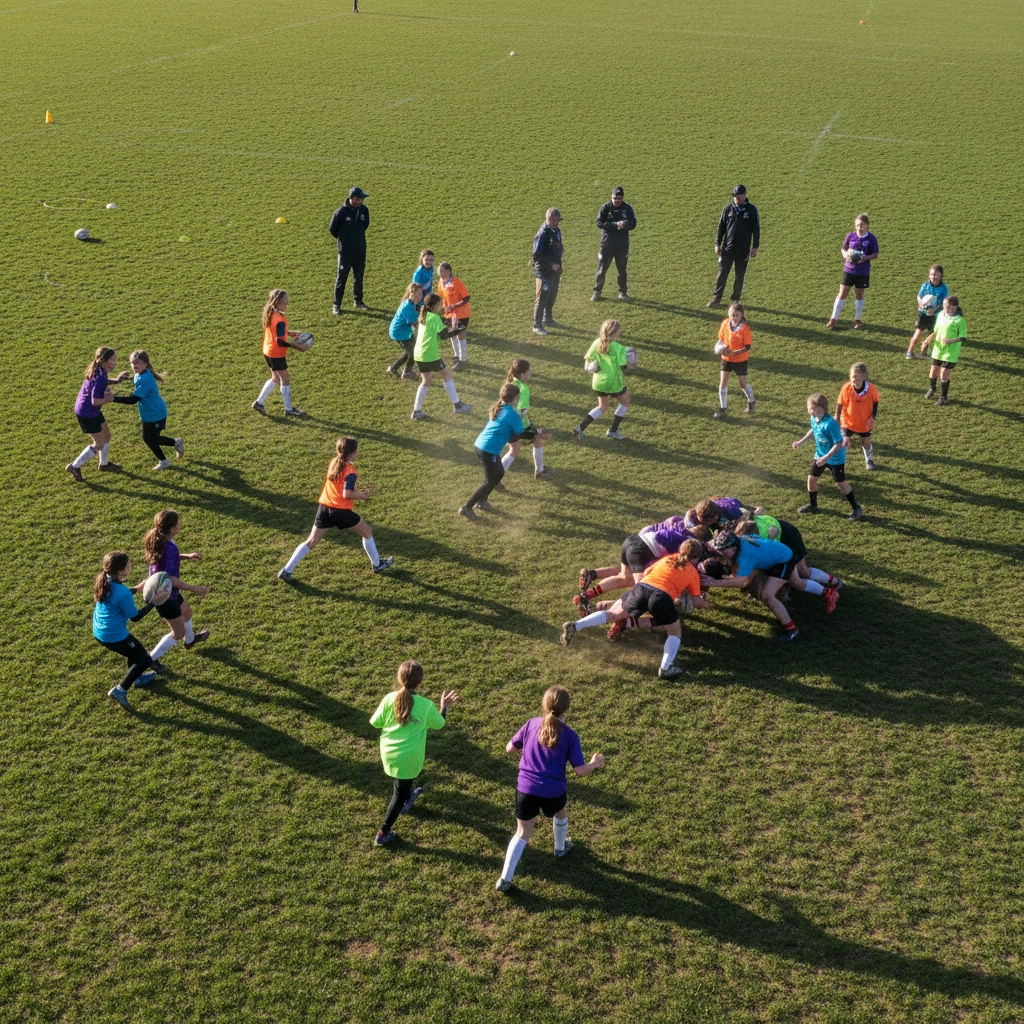
Whether it is 4v4, 5v5, 7v7, touch, tag, or modified contact, small-sided games give young players more of the moments that make rugby rugby: more touches, more decisions, more space to read, and more opportunities to learn safely.
The goal is not simply to create better players. At SAFFA RUGBY ACADEMY, we work from the principle of person first, student second, player third. We want young people to become confident, thoughtful teammates before we ask them to become technically excellent rugby players.
That is the heart of SIMUNYE: We are one.
Why small-sided games develop rugby intelligence faster
In a full-sided game, a young player may go several minutes without touching the ball. They may be standing too far from the action to see the key decision, or they may simply be hidden behind a group of teammates.
In a 4v4 or 5v5 game, the picture changes immediately.
Players are closer to the ball. They are involved in attack and defense more often. They have to scan before receiving, recognize where the space is, communicate with teammates, and make decisions under realistic pressure.
Research into youth rugby and small-sided games consistently points to the same benefits: increased ball involvement, more technical actions, greater decision-making demands, and improved tactical understanding. The game becomes a learning environment rather than a rehearsal for a game that never arrives.
Small-sided games also connect the technical, tactical, physical, and emotional parts of rugby. A player is not only practicing a pass. They are deciding when to pass, noticing who is available, moving into support, and recovering quickly when the ball is lost.
That is game intelligence.
What do young players actually learn?
1. Scanning before the ball arrives
A player who only looks at the ball is already late.
Small-sided games encourage players to check their shoulders, identify defenders, notice support runners, and recognize space before receiving. The smaller format gives them repeated chances to practice this habit.
Coaches can ask:
What did you see before you received the ball?
Where was the defender’s inside shoulder?
Who was available as your next support option?
How did the space change after the first pass?
These questions help players own the learning instead of waiting for a coach to provide every answer.
2. Faster decision-making
Rugby is not a multiple-choice test with unlimited time. Players must decide whether to carry, pass, step, straighten, kick, support, or realign.
In a small-sided game, those choices appear frequently.
A 4v3 overload may teach attackers to identify the free player. A 5v4 defensive game may help defenders connect, slide, and protect the inside space. A touch game with two passes before scoring can encourage players to move the ball and look for support rather than trying to beat every defender alone.
The goal is not to find one “perfect” answer. The goal is to help players recognize the picture and make a positive decision.
3. Communication
Communication becomes real when it changes what a teammate does.
Players learn to call for the ball, identify threats, organize the defensive line, and offer information before the pressure arrives. They also learn that communication is more than shouting. Eye contact, body position, running lines, and movement can all communicate intent.
One simple constraint is to award a bonus point when a try follows a clear support call or defensive communication. Another is to rotate a game captain who must organize the defensive line for each possession.
When players help lead the game, they develop responsibility and confidence.
4. Support lines and connection
A small-sided game quickly shows players that the ball carrier is rarely the whole attack.
Can the support player run at the right depth? Can they stay available without standing flat? Can they move into space instead of following the ball? Can the team maintain width?
The same applies in defense. Players learn to work together, close gaps, communicate inside and outside, and move as a connected line.
This is where SIMUNYE becomes visible. We are one does not mean everyone stands in the same place. It means each player understands how their movement helps the group.
5. Safe failure and resilient learning
Young players need permission to try.
Small-sided games create a manageable environment where a player can attempt a step, pass into space, defensive read, or support line without the entire team structure collapsing. Mistakes become information.
At SAFFA RUGBY, we want players to develop a short memory and a strong response. What happened? What did you notice? What can you try next?
That is how resilience grows.
How coaches can progress and constrain the game
Small-sided games work best when coaches design them with a clear purpose. The format may look simple, but small changes can create very different learning outcomes.
Change the numbers
Numbers are one of the quickest ways to shape decisions.
3v3 or 4v4: More touches, more space to attack, and frequent one-on-one decisions.
4v3 or 5v4: Encourages players to identify overloads and communicate the best attacking option.
5v5 or 7v7: Adds more realistic support, defensive connection, and transition demands.
Numerical disadvantage: Challenges defenders to slow the attack, protect space, and work together.
Rotate players through different roles so they experience attacking and defending from varied perspectives.
Change the space
Space changes the question the game is asking.
A narrower field can encourage quick passing, strong support, and tighter defensive connection. A wider field creates opportunities for scanning, evasion, width, and longer support lines.
For younger players, keep the space manageable so they can understand the picture. For high school players, increase the space when you want to challenge their running capacity, transition decisions, and ability to recognize threats across the field.
A useful coaching question is: What do we want players to see more often? Then adjust the field to make that picture more likely.
Change the rules
Rules should guide behavior without taking ownership away from players.
Try:
Two passes before a team can score.
A try only counts after the ball has reached width.
Bonus points for a line break created through support.
Touch-and-pass games where players must realign quickly.
Modified contact with clear tackle technique and immediate recovery.
A turnover if the attacking team fails to communicate before receiving.
The best constraints encourage players to solve problems. They should not turn the game into a script.
Change the time
Short bouts keep decision quality high.
For youth players, try two- to four-minute games with quick coaching questions between rounds. Older or more experienced players may handle longer bouts, especially when the goal is to develop decision-making under fatigue.
Rather than stopping every mistake, let the game breathe. Coach the moments that connect directly to the session goal, then allow players to try again.
Where small-sided games fit in a Colorado youth rugby session
For a 60-minute youth or high school session, a simple structure could look like this:
Arrival and connection: 5 minutes Welcome players, check in, and establish the focus for the session.
Movement and ball activity: 10 minutes Use partner passing, evasion, reaction games, or a dynamic warm-up to prepare bodies and minds.
Skill focus: 10 minutes Introduce the technical theme, such as catch-pass, tackle entry, support lines, or defensive connection.
Small-sided game: 15 minutes Start with a simple format such as 4v4 touch or 5v5 modified contact. Let players experience the skill in context.
Progression game: 15 minutes Change the numbers, space, rules, or direction to increase the decision-making challenge.
Reflection and finish: 5 minutes Ask players what they saw, what worked, and what they want to try next.
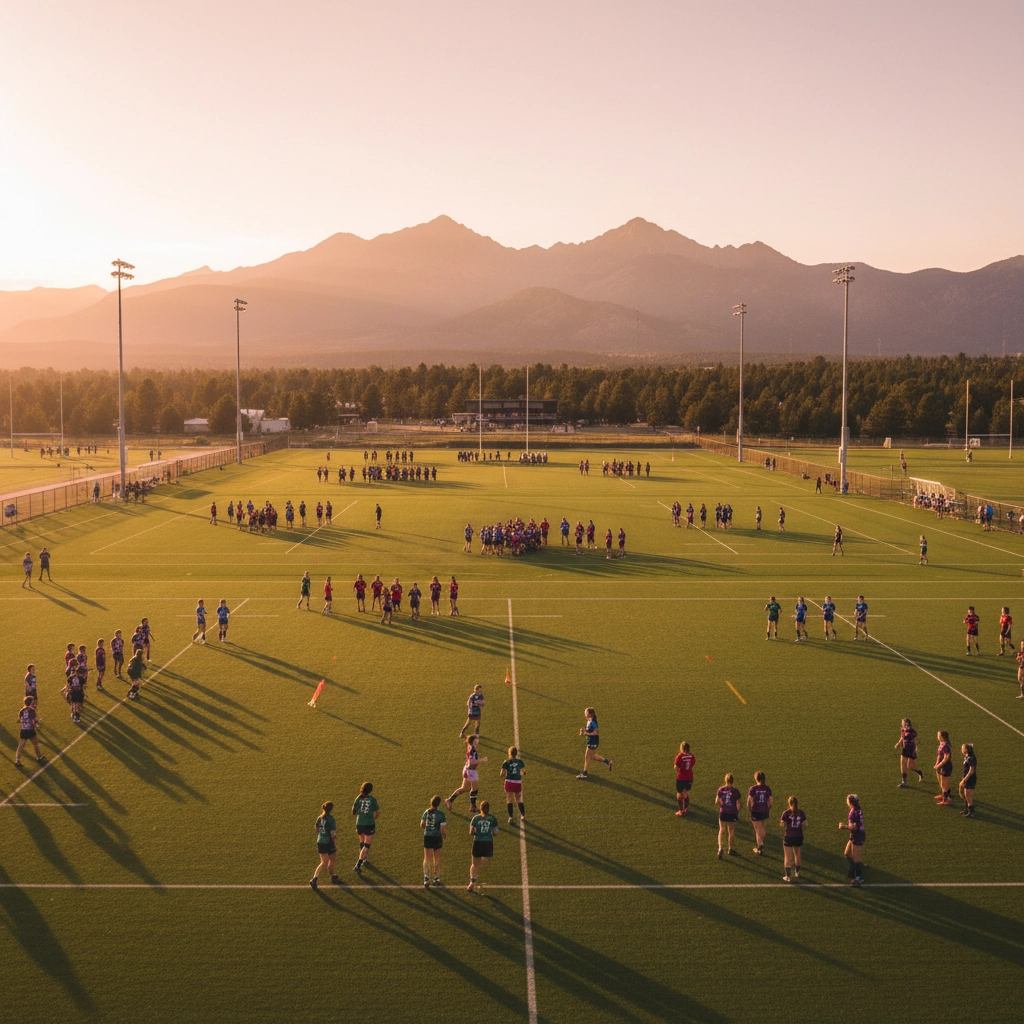
In Colorado, where youth and high school programs continue to grow across different communities, this approach is flexible. It works on a school field, at a club practice, during a development clinic, or in a smaller training space affected by weather.
It also allows coaches to include players with different experience levels. A newer player can learn through touch or tag, while a more experienced player can be challenged through defensive leadership, transition play, or modified contact.
Why small-sided games work for boys’ and girls’ rugby
Good player development is not limited by gender.
Girls and boys both need opportunities to handle the ball, make decisions, communicate, take space, support teammates, and defend as a connected group. Small-sided games increase involvement for every player and reduce the chances of one or two athletes dominating the session.
They also help create a positive team culture. Players get more chances to lead, encourage teammates, recover from mistakes, and contribute in different ways.
That matters as Colorado continues to build stronger girls rugby pathways. As we have written in why Colorado needs more girls rugby programs, access and quality coaching must grow together. Small-sided games are one of the best tools for making every session active, inclusive, and meaningful.
Coach-focused and parent-friendly takeaways
For coaches, start with the question: What decision do I want players to make more often today? Then shape the numbers, space, rules, and time around that outcome.
For parents, look for sessions where your child is moving, thinking, communicating, and touching the ball regularly. A practice does not need to look perfectly organized to be effective. Sometimes the most valuable learning happens in the controlled chaos.
At SAFFA RUGBY ACADEMY, Coach Rob Quickfall and the coaching team believe that rugby intelligence grows through experience. Players need the chance to explore the game, make decisions, learn from outcomes, and understand how their individual actions serve the team.
Small-sided games make that possible.
More touches. More decisions. More connection. More confidence.
That is how we develop the person first, the student second, and the player third.
We are one. We are SIMUNYE.
For coaching development, player clinics, team training, or 1-to-1 support in Colorado, explore SAFFA RUGBY’s programs or connect with the team.
Continue exploring the coaching philosophy behind this approach in theSAFFA RUGBY ACADEMY reference blog.
Comments